What makes something, or someone, unforgettable? A living room where sunlight lands just so, a kitchen that looks like it belongs on a magazine cover, or a woman who brings a sense of elegance to every room she enters. There is a certain spark, an effortless kind of style, that we notice before we can name it. Later, we realize: this is what people mean when they talk about taste.
But what is taste, really? Is it something we pop out of the womb with, or is it something that takes shape over the years, layering itself into our personality?
"Beauty is no quality in things themselves; it exists merely in the mind which contemplates them."
We're definitely not the first to wonder about this. Back in 1757, the Scottish philosopher David Hume gave it some serious thought in his essay "Of the Standard of Taste". He famously wrote, "Beauty is no quality in things themselves; it exists merely in the mind which contemplates them." In other words, what you find beautiful might be entirely different from what I do – and that is perfectly normal. Or, as Margaret Wolfe Hungerford put it so simply a century later: beauty is in the eye of the beholder.
Which, if you think about it, should mean none of us is ever really wrong about what we find beautiful. And yet, let us be honest, we do not actually live that way. We still find ourselves saying, "She just has such good taste," or, sometimes, thinking, "Well, that was certainly a choice." We treat some people's sense of style or beauty as more developed and refined than others'. Why do we do that?
Fast forward a couple of centuries and along comes the French sociologist Pierre Bourdieu with his own theory. In 1979, he wrote a book called Distinction, arguing that taste is not something you are born with, but something you pick up as you go. He called this process habitus – a grand word for the slow, subtle way we soak up everything around us. Like the homes we grew up in, the women and men we watched getting dressed and so on. In Bourdieu's view, taste is really a scrapbook of all the places and people that have left their mark on us.
We could spend hours debating whether the Scottish philosopher or the French sociologist got closer to the truth. But maybe, in their own ways, they were both onto something. Taste is not handed to us; it is patiently built. It is the layering of impressions over the years – an eye shaped by time, experience, and the places and people who taught us how to see.
Hume, in that same essay, described what it really takes to develop great taste. His answer still feels surprisingly relevant. According to him, a person with trained taste has "strong sense, delicate sentiment, improved by practice, perfected by comparison, and cleared of all prejudice." Five conditions, and most of them have a lot more to do with patience and time than with any natural talent.
So, what does all this really mean for us today? Building taste, in the real world, seems to come down to a handful of things.
Long exposure. As Hume speculated, taste is not something we wake up with – it comes from years of noticing little things. Paging through magazines, wandering museums, sitting at a friend's kitchen table, or people-watching in a café. It is about picking up on the details: the pattern on a teacup, the way someone arranges flowers, how colours work together in a room. Bourdieu might have called it "cultural capital," but really, it is all those small moments of paying attention. Whether it is art, wine, or just picking the right pair of shoes, the people with the best taste are usually the ones who notice what others might miss.
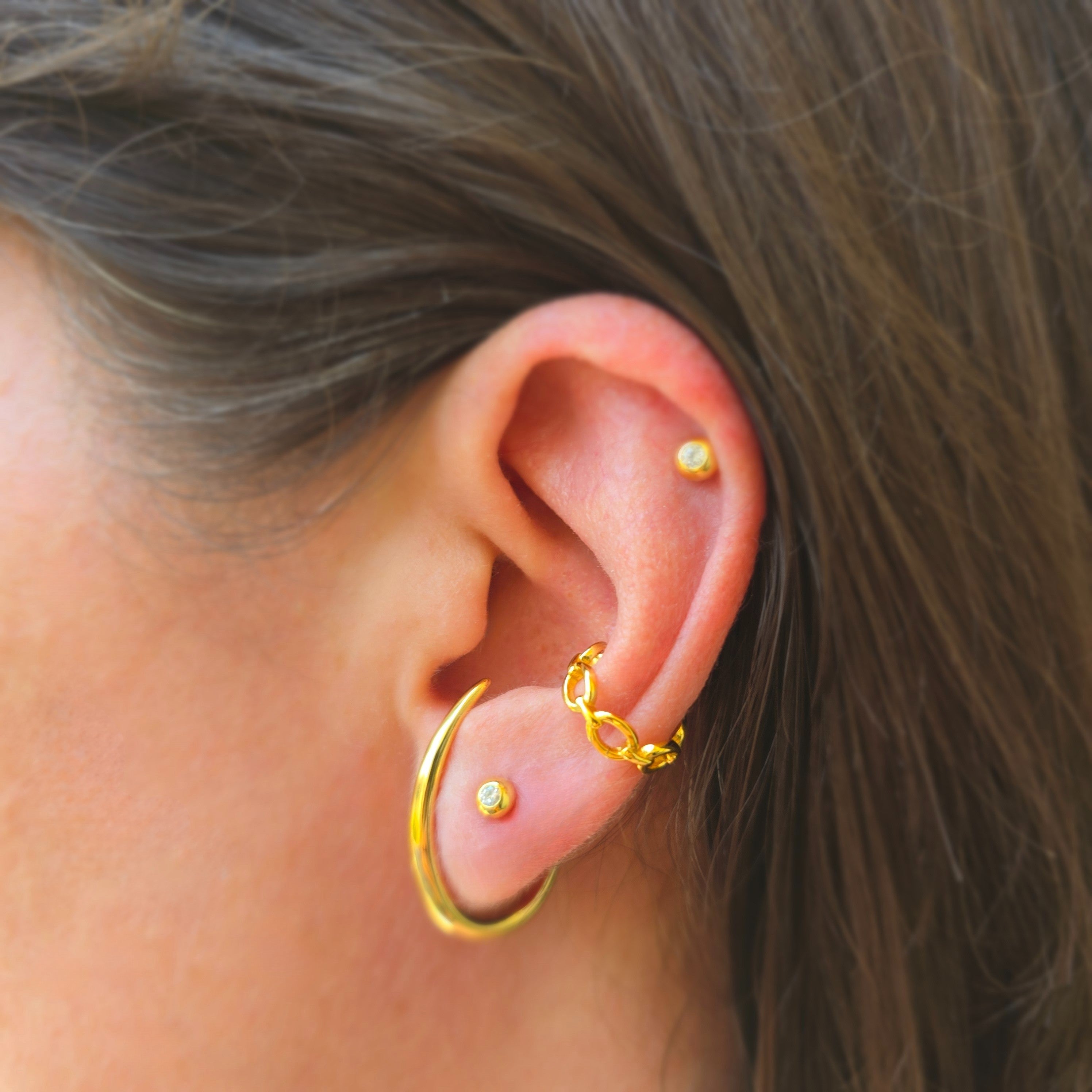
Comparison. This part is all about putting things side by side. Hume called it comparison, and it is as simple as noticing the difference between two pairs of earrings – one with a smooth finish and subtle sparkle, the other made without much attention to detail. Seeing things next to each other sharpens our eyes more than any guidebook ever could. That is why, over time, people who care about taste usually end up wanting to see (and touch, and try) the best examples of whatever it is they love.
Refusal. Then there is what Chanel summed up perfectly: "Elegance is refusal." Taste is built just as much by what you turn down as by what you say yes to. It's all about skipping the trends that never quite felt right, passing on that one colour you realise always drains you, or leaving a dress on the rack – even if it cost a fortune. Every time we say no, we are shaping our own sense of style. What is left, after all those little refusals, is what truly feels like us.
"Elegance is refusal."— Coco Chanel
Living with your own mistakes. Wrong choices are part of the process too. Every one of us has brought home something we were sure would be perfect, only to have it hang in the closet, unworn for 5 years. But those little fashion missteps teach us more than any style guide ever could. We start to see the difference between what catches our eye in the moment and what truly suits us. Maybe, in the end, it is the pieces we get wrong that reveal the most about who we are becoming.
Encounters with people who have it. Hume believed that being around people with refined taste can shape our own, sometimes more than any book or rule. There is something unmistakable about meeting someone whose choices inspire us – from the way they put a look together to the atmosphere they create around them. These moments can leave a lasting impression, sometimes changing the way we see things forever and inspiring us to raise our own standards.
Slow attention, repeated. "Deliberate, accumulated attention" is a concept supported by psychology research – particularly by Anders Ericsson, whose work explores how people develop true expertise. Developing real taste, like any skill, comes from consciously noticing the details again and again over the years. There is no quick way around it. All those moments of paying close attention add up to a confidence and sense of style that no influencer or online course can give you.
So, after exploring philosophers, family influences, and all those little choices along the way, what does it really come down to? Taste is not about chasing every trend or filling every shelf. It is about gathering what feels right, and just as patiently letting go of what does not. Of course, what feels right can look very different depending on where we come from – our families, cultures and backgrounds all shape our sense of taste in unique ways. The details that feel elegant or inviting in one place might seem unfamiliar in another, and that's part of what makes taste such a personal and interesting thing to build.
Maybe that is the quiet magic of taste: the more we pay attention, the more attuned we become – not to perfection, but to the things that genuinely feel like us. There is no final destination, no perfect collection. Instead, there is the ongoing pleasure of noticing, learning, and letting our eyes keep evolving.
Perhaps if we want to develop our own taste more intentionally in daily life, we simply need to start noticing what catches our attention – a display in a shop window, the way a friend accessorized her look, a fabric that feels just right. There's something interesting about pausing to wonder what draws us in or letting ourselves linger a little longer with what we love. Even small, everyday moments of curiosity have a way of shaping our sense of style, choice by choice.
In the end, real taste is simply the art of staying curious – about the world, about others, and about ourselves. And isn't that the most stylish thing of all?